
May 5, 2026 · active
Dry Run
A rehearsal of the product before it exists. Designs are real React committed to a repo and walkthroughs replace PRDs. Testing whether the shell repo I built at work could become a tool anyone could adopt.
Why this exists
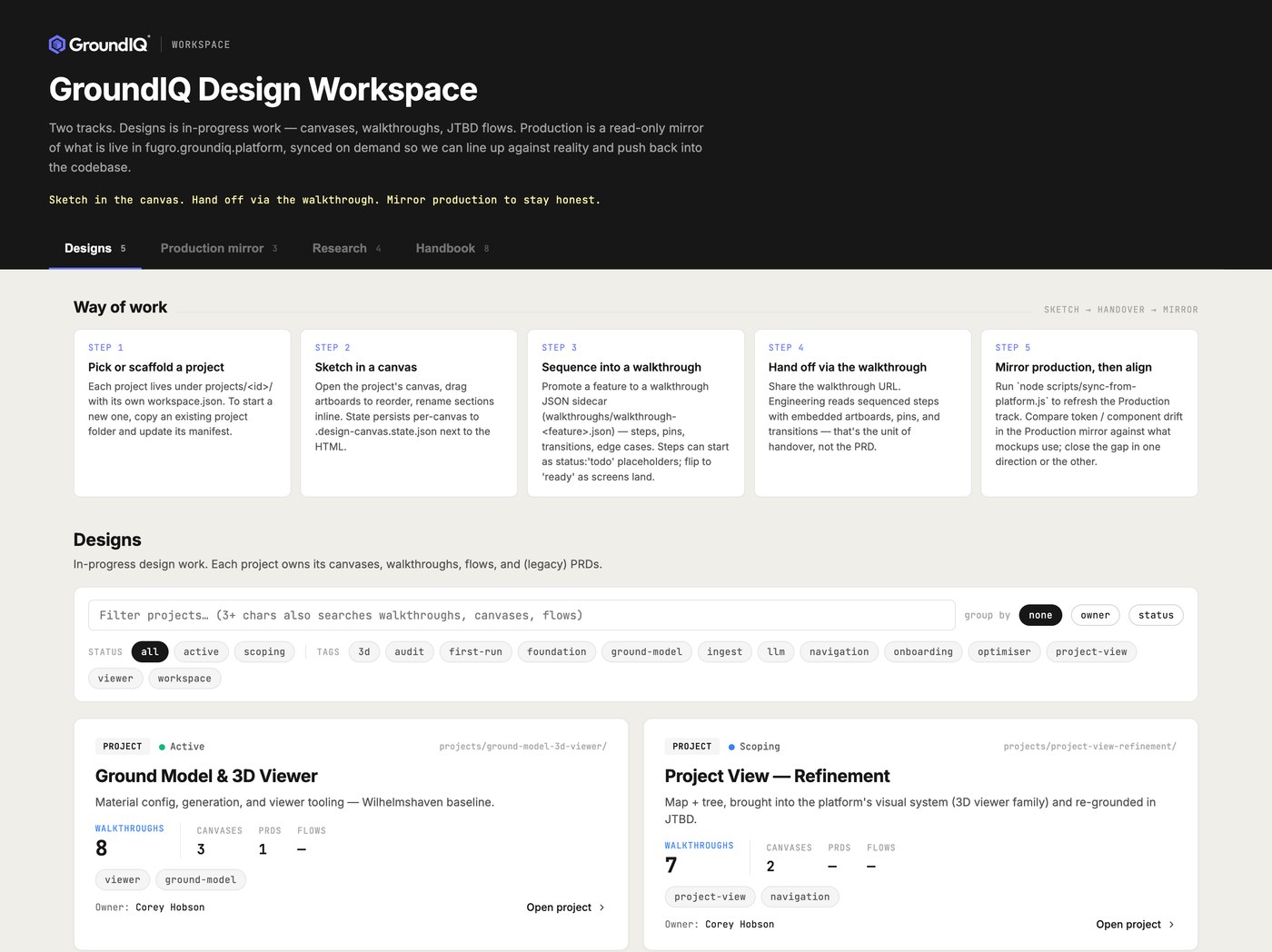
At GroundIQ I stopped using Figma and built a shell repo instead: hi-fi React mockups of the platform, served as static files, deployed on GitHub Pages. Anyone in the company can open it, use it, and PR against it. The design became the implementation spec.
Dry Run is the generalised version, a rehearsal of the product before it exists. The question was whether the idea survives outside one team that already writes code.
What it looks like
What it is
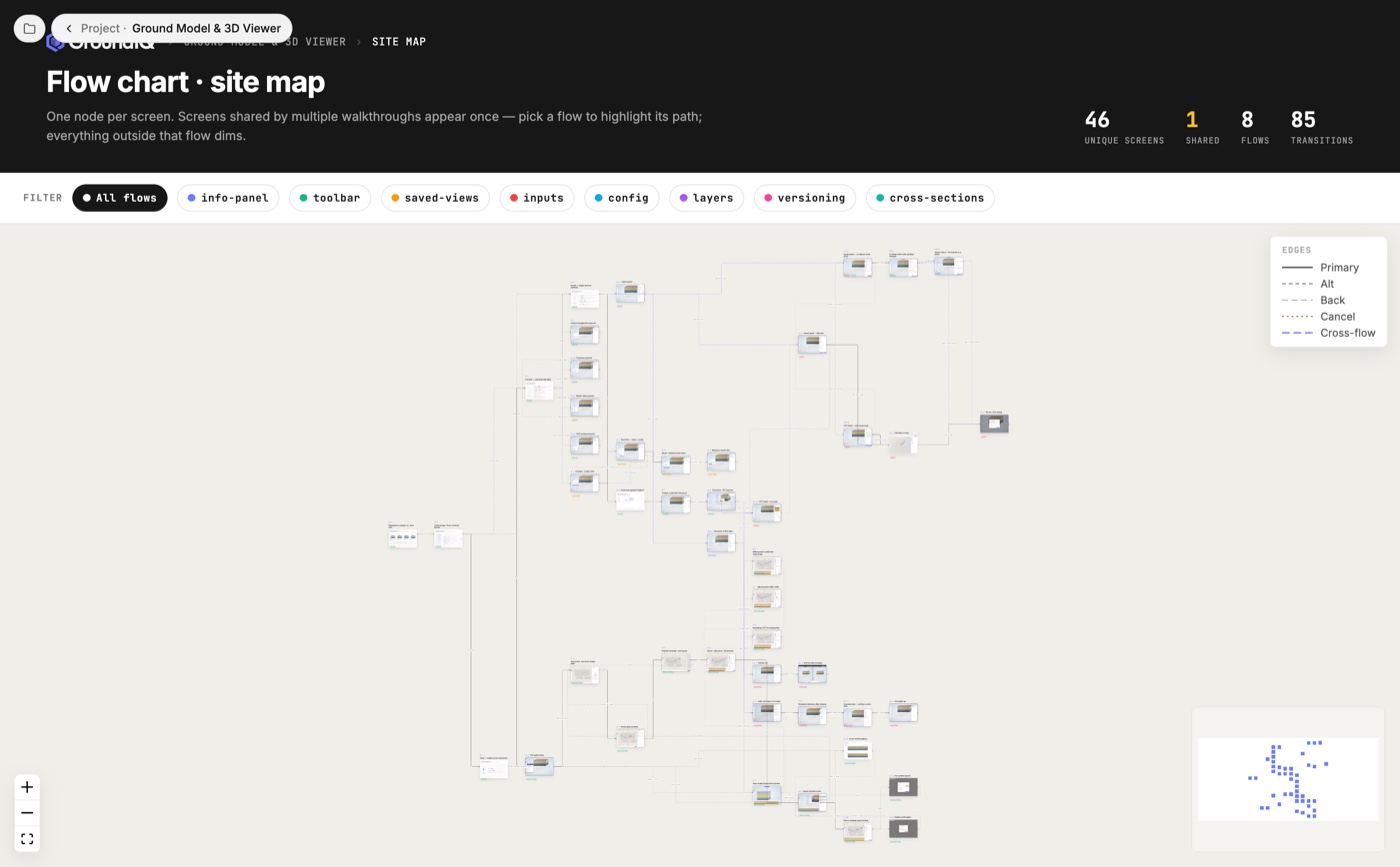
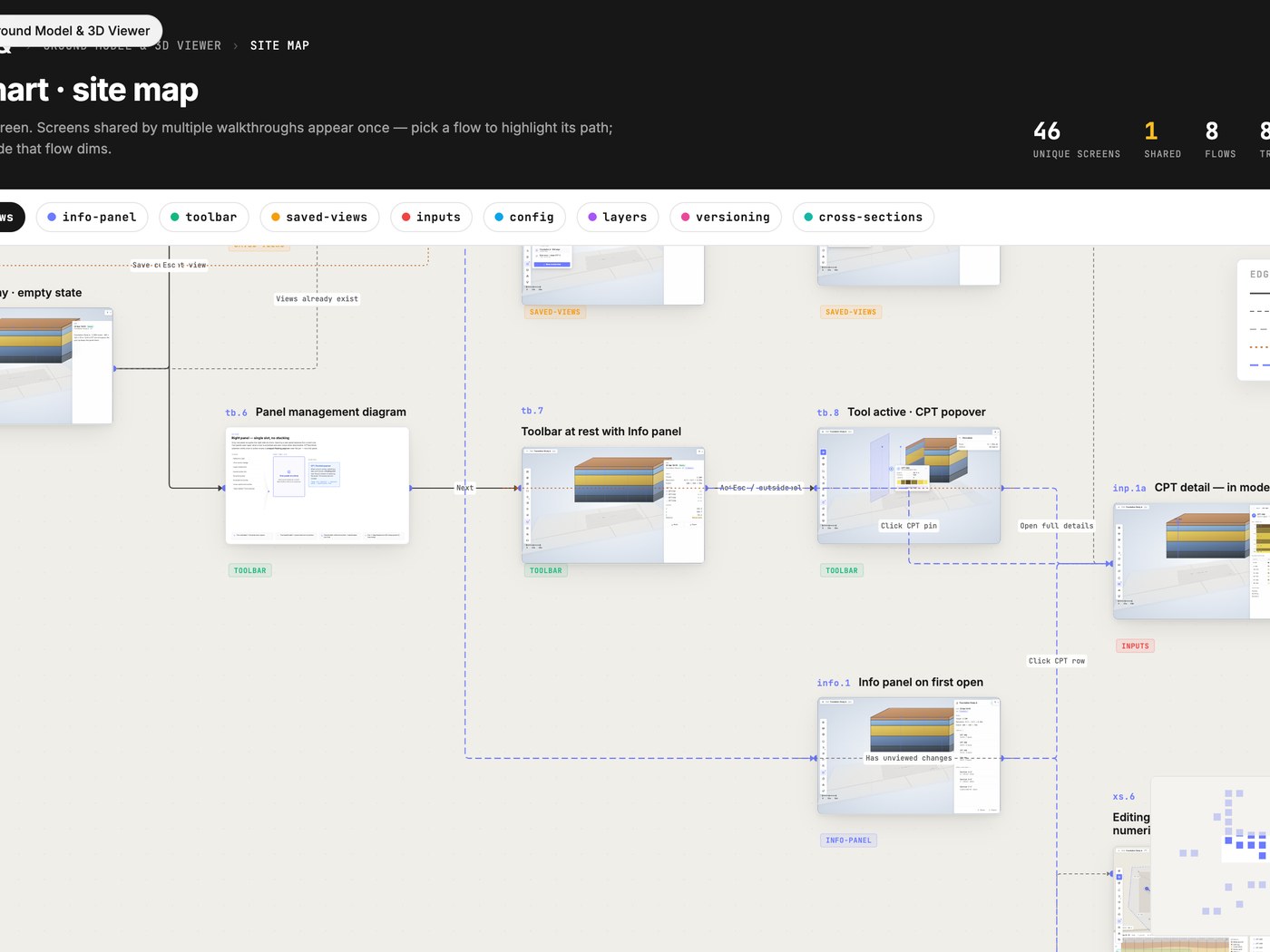
Designs are JSX. Artboards are React components. Walkthroughs and scope live as JSON sidecars next to them. Everything is in git, so a design change is a diff and a review.
The workspace is its own repo. It sits beside your real app as a sandbox. Designers cannot break production. The AI reads your app’s components and tokens read-only and writes only into the workspace.
Walkthroughs replace PRDs. A feature spec is a sequence of artboards with annotations and a status per step. Steps can exist as placeholders before any screen does. The walkthrough is the spec, the design follows it.
AI is codebase-aware. Generated screens reuse your existing components and tokens. It never invents a button.
What I learned
PRDs were never read. Walkthroughs are, because they look like the product. That was the finding at work, and it held here.
Zero dependencies was the right call for the server. One file, serves a folder, exposes a write bridge for JSON sidecars. Anyone can run it.
Status
Pre-alpha, and the name is new. It started as Buildready. The async workflow is there: workspace shell, canvas, walkthrough renderer, AI authoring with your own API key. Realtime collaboration is deliberately not.
Stack
React, JSX served in the browser, a single Node server with no dependencies, JSON sidecars for state.