- Mirro
- Designer
Mirro
UX Designer for a Dutch E-Health platform connecting patients, practitioners, and health data. Shaped the interface for a complex medical product serving clinics across the Netherlands.
Visit website →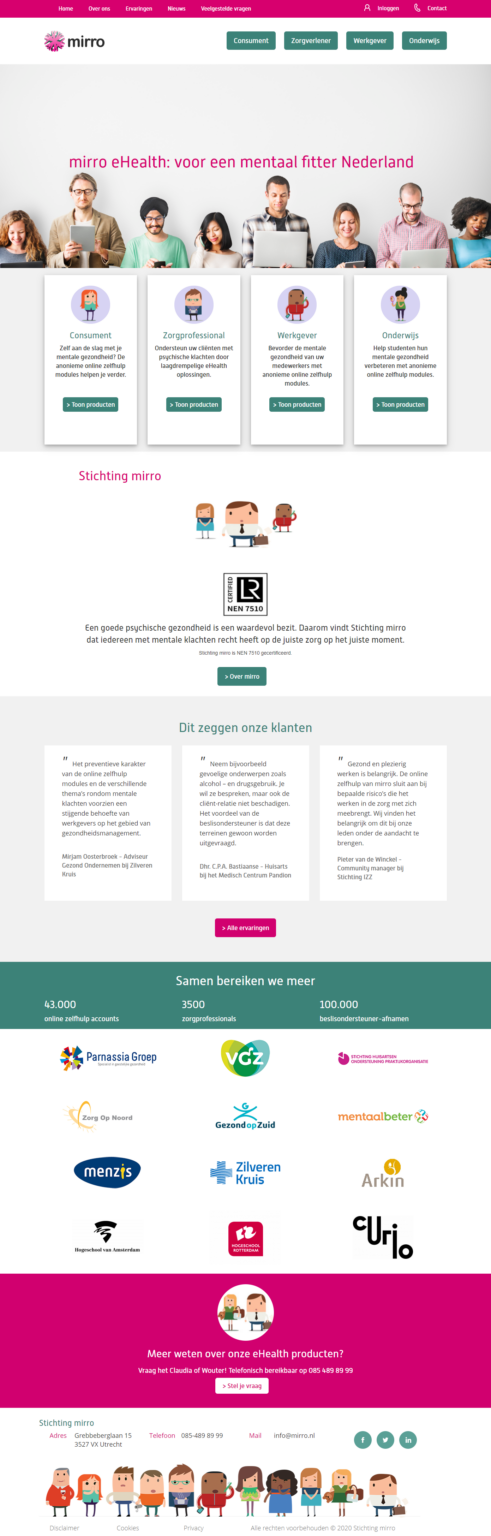
Mirro is a Dutch E-Health platform that connects patients with healthcare providers through shared health records, appointment management, and secure messaging. The product operates at the intersection of clinical rigor and consumer usability: patients need clarity, practitioners need speed, and regulators need compliance.
As a Designer, I worked across the patient-facing and practitioner-facing interfaces. The work spanned user research, interaction design, and visual refinement for a product used in real clinical settings.
Designing for two audiences
The platform served two distinct user groups with conflicting needs. Patients wanted simplicity, reassurance, and clear pathways to action. Healthcare providers wanted density, efficiency, and complete medical context at a glance.
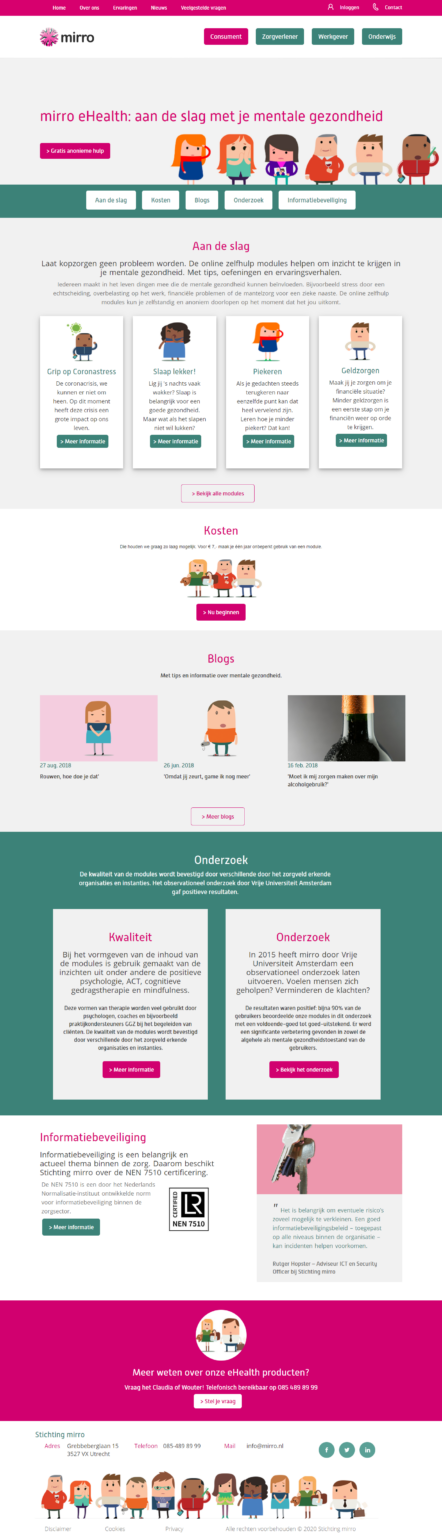
Bridging this gap meant designing shared components that rendered differently depending on context. A lab result looked clinical and detailed for the practitioner but was simplified with plain-language explanations for the patient. Same data, two presentations, one source of truth.
Constraints that shaped the work
Healthcare software operates under strict constraints. Privacy regulations required careful handling of data visibility. Medical terminology had to be precise for practitioners but translatable for patients. Interface decisions had downstream consequences for clinical workflows that couldn’t be measured in a usability test alone.
The design process included regular reviews with clinical stakeholders to validate that interface choices didn’t introduce medical risk. A mislabeled field or poorly placed button isn’t just bad UX in healthcare. It’s dangerous.
Process
I worked within an agile product team, contributing to sprint planning, design reviews, and developer handoff. Research included observing clinic workflows, interviewing practitioners about their daily tooling, and testing prototypes with patients across different age groups and health literacy levels.
The product was live and evolving. Every design change shipped to real clinics with real patients. That pressure kept the work honest. No design debt you can ship and forget. Every pixel had a user on the other side.
- Figma
- Sketch
- Miro
- React